

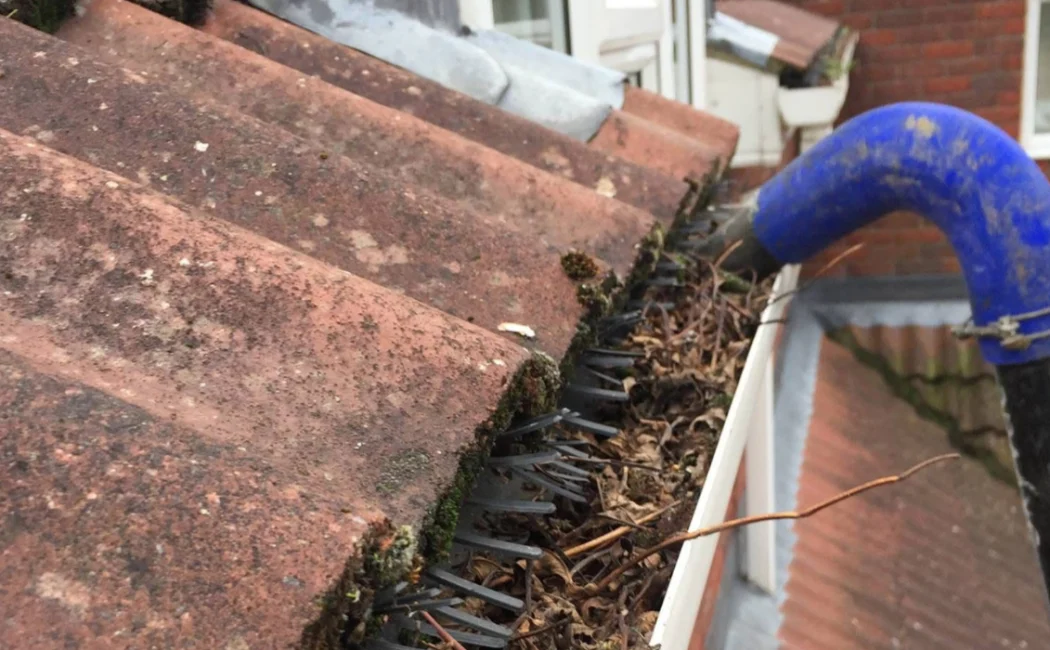
Many property owners underestimate the impact of poor gutter care. In this guide, “How Blocked Gutters Lead to Roof Damage”, we explain how clogged drainage systems cause tile decay, leaks, and structural issues. Homes across March, Cambridgeshire, Newmarket, and Suffolk are subject to regular rainfall. When gutters fail, roofs suffer first.
Blocked gutters do more than spill water over the edge. They force rainwater back onto the roof tiles and under the felt layers. Over time, this weakens the entire roofing system.
Why Gutters Matter More Than You Think
Gutters direct rainwater from the roof to the ground. They protect fascia boards, roof edges and external walls.
The Role of Gutters in Roof Protection
Every roof relies on clear drainage channels. Rain falls on the roof and flows into the gutters. Downpipes then direct water away from the building base.
When debris blocks these channels, water builds up along the roof edges. This standing water increases the risk of penetration beneath tiles.
How Water Should Flow From Your Roof
In a healthy system, water drains within seconds of rainfall. It should never pool or spill over the gutter line.
If you notice slow drainage or overflow during light rain, your gutter system likely needs attention.
How Clogged Gutters Cause Roof Leaks
Overflowing gutters rank among the main causes of roof water damage.
Backed-Up Water Under Roof Tiles
When gutters clog with moss, leaves and silt, water cannot escape. It rises until it finds another path.
Often, that path leads under the first row of roof tiles. Once water reaches the underlay felt, it can seep into the loft space.
Damage to Underlay and Battens
Prolonged moisture affects the roof felt and timber battens. Timber absorbs moisture, which can weaken it.
Over time, this results in sagging sections and loose tiles. Early gutter cleaning prevents this chain reaction.
The Hidden Link Between Moss and Gutter Blockage
Roof moss and gutter issues often occur together.
Moss Falling From Roof to Gutter
Heavy moss growth on tiles loosens during wind and rain. Chunks slide into gutters and form dense blockages.
This debris mixes with leaves, forming compacted material that impedes water flow.
Why Roof Cleaning Supports Gutter Health
Professional roof cleaning reduces moss fall. Removing moss at the source protects both the tiles and the drainage system.
This combined approach prevents repeat blockages.
Fascia and Soffit Damage From Overflow
Gutters protect the roof edges and supporting boards.
Rotting Fascia Boards
When water spills over blocked gutters, it runs behind the fascia boards. Timber fascia absorbs moisture and begins to rot.
Rot spreads quickly if left untreated. Replacement costs rise when owners delay action.
Staining and Structural Weakening
Persistent overflow stains render the brickwork. In severe cases, moisture reaches the roof trusses.
Routine gutter clearance protects these vulnerable areas.
Winter Freeze and Ice Damage
Cold weather increases the impact of blocked drainage systems.
Ice Dams at Roof Edges
Standing water freezes during winter nights. Ice forms along gutter lines and roof edges.
This ice expands and lifts tiles slightly. Once lifted, water can enter during the next thaw.
Expansion and Tile Cracks
Freeze-thaw cycles weaken tile structure. Small cracks grow larger over time.
Regular maintenance prevents water from remaining long enough to freeze.
Internal Damp and Loft Issues
Roof damage often starts outside but shows inside first.
Damp Insulation in Loft Space
When water enters through tile gaps, insulation absorbs moisture. Wet insulation loses efficiency.
This leads to higher heating costs and poor air quality.
Ceiling Stains and Plaster Damage
Small leaks create ceiling marks. Over time, plaster softens and paint peels.
Homeowners often blame the roof covering when blocked gutters cause the issue.
Structural Risks From Long-Term Blockage
Ignoring clogged gutters can lead to serious structural damage.
Timber Decay in Roof Structure
Moisture that enters roof voids affects timber supports. Rafters and battens weaken under prolonged exposure to moisture.
This increases the likelihood of sagging roof lines.
Increased Repair Costs Over Time
Minor gutter cleaning costs far less than roof repair. Delays often lead to tile replacement, timber repairs, and changes to loft insulation.
Preventative care always costs less than reactive repair.
Signs Your Gutters Are Damaging Your Roof
Early warning signs help avoid major problems.
Water Overflow During Rain
If you see water spilling over the sides of the gutters during rainfall, blockages are likely present.
This visible sign should prompt immediate inspection.
Plants Growing From Gutters
Weeds or grass growing in gutters indicate long-term debris buildup.
This level of blockage almost guarantees water backup during rain.
Sagging or Detached Gutter Sections
Heavy debris increases the weight load. Gutters begin to sag or detach from fascia boards.
This strain also affects roof edge stability.
How Often Should Gutters Be Cleaned?
Routine maintenance protects roof integrity.
Recommended Cleaning Schedule
Most properties in March and Cambridgeshire require gutter cleaning at least once per year.
Homes near trees may require cleaning twice yearly.
After Storm Inspections
Severe storms dislodge debris from nearby trees. A post-storm check prevents hidden blockages.
Regular inspection ensures water flows freely.
Professional Gutter Cleaning vs DIY
Some owners attempt ladder-based cleaning.
Risks of Ladder Work
Working at height carries risk. Slippery debris and unstable ladder placement increase the risk of accidents.
Professional teams use safe access equipment and stabilised systems.
Thorough Debris Removal
Professional gutter cleaning removes silt and flushes downpipes. This ensures full water flow restoration.
DIY clearing often removes surface debris but leaves compacted material behind.
The Local Impact in March and Cambridgeshire
Regional weather patterns affect drainage performance.
High Rainfall Periods
Autumn and winter bring heavy rain to Cambridgeshire and Suffolk.
Blocked systems struggle to cope during these months.
Tree-Lined Streets and Leaf Fall
Many homes in March sit near mature trees. Falling leaves create repeat blockages.
Scheduled cleaning before winter reduces risk.
Preventing Roof Damage Through Maintenance
Stopping gutter-related roof damage requires simple planning.
Combine Roof and Gutter Cleaning
Removing moss and clearing gutters together delivers stronger results.
This approach prevents debris from returning immediately.
Annual Inspection Routine
A yearly inspection identifies early signs of drainage failure.
Property owners protect the roof’s lifespan with consistent maintenance.
Gutter Blockage and Roof Damage
Understanding how blocked gutters cause roof damage helps homeowners avoid costly repairs. Clogged drainage forces water beneath tiles, weakens timber supports, and increases the risk of damp. Many roof problems begin with simple gutter neglect.
If you notice overflow, plant growth or damp patches, act quickly. Professional gutter cleaning in March, Cambridgeshire, Newmarket and Suffolk protects your roof, walls and property value.
Preventive care saves money. Clear gutters protect your roof.